


Suwałki Gap: why Poland is part of any Baltic scenario
Geography does not make war inevitable, but it makes Baltic security impossible to analyse without Poland.
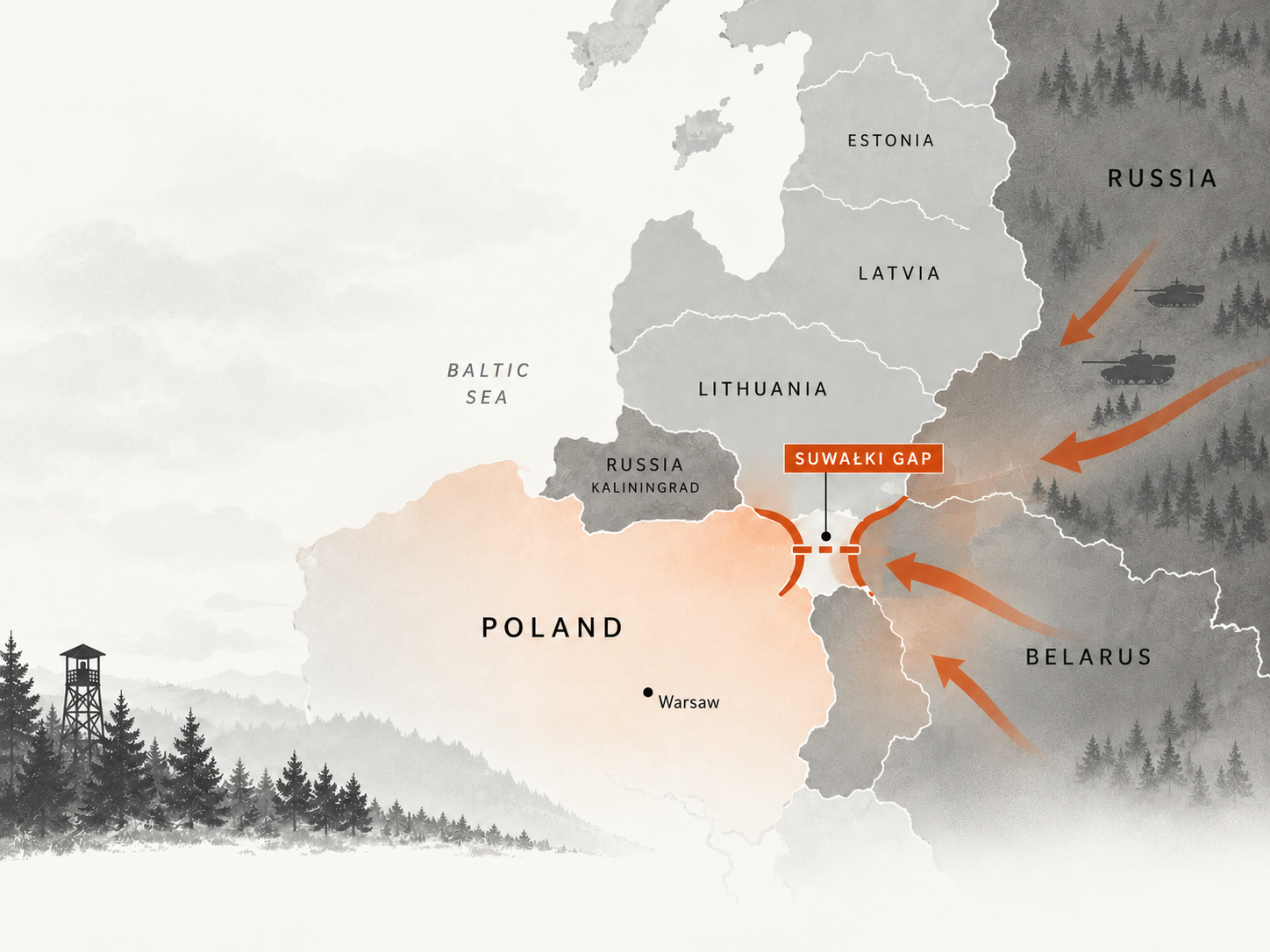
Geography as commitment
The gap is not an isolated point on a map but part of a system of links, air defence, surveillance and reinforcement reception.
That is why any Baltic crisis almost immediately becomes a question of Polish readiness and NATO-wide credibility.
Analytical framework
Facts
- Poland provides the land connection to Lithuania.
- Kaliningrad and Belarus create two pressure directions.
Assessment
The main risk need not take the form of a classic assault; pressure can test mobility, decision-making and alliance cohesion.
Uncertainties
Actual crisis throughput and readiness are partly classified.
What would change the assessment
Correlated deployments on both sides of the gap with movement interdiction and strong air cover.
How a crisis could develop
T+0 — Disruption
Cyber, EW and border pressure.
T+24h — Mobility test
Movement disruption and ambiguous incidents.
T+48h — Alliance dilemma
Reinforcement decision under time pressure.
Sources
- NATO — NATO’s deterrence and defence posture (accessed: 2026-09-17)
- OSW — Ośrodek Studiów Wschodnich — Analizy (accessed: 2026-09-17)
- Reuters — Europe security coverage (accessed: 2026-09-17)
Revision history
- 2026-09-12 — Initial publication; assessment unchanged.
Read next
Current assessment
LiveCasualties or serious violations of NATO territory
Assessment time